How Can You Maintain Hydration Every Day?

Water is vital for good health, but needs vary from one person to another. If you have been wondering how much water you should drink every day, these guidelines can help. Hydration is a key part of staying healthy, especially during physical activity.

No single formula suits everybody. However, understanding your body’s requirement for fluids can help you estimate the amount of water you should drink daily and ensure one is able to stay hydrated.

What are the Health Benefits to Drink Water?

Water makes up around 60% of your overall body weight. The human body relies on water to survive. Adequate hydration allows your body cells, tissues, and organs to work correctly. For instance, water:

  • Removes waste via urination, sweating, and bowel movements.
  • Helps to keep your body temperature healthy.
  • Guards sensitive tissues in the body.
  • Lubricates and cushions your joints.

Insufficient water intake can cause dehydration. It is a condition whereby your body lacks sufficient water to function correctly. Even mild dehydration may drain you of energy and leave you feeling tired.

How Much Water Should You Drink Every Day?

Each day, your body loses water via breathing, perspiration, urination, and bowel movements. Therefore, you need to replenish its water supply daily by consuming fluids to maintain proper body function.

How much fluid should the average healthy adult staying in a temperate climate take? According to the National Academies of Sciences, Engineering, and Medicine, sufficient daily fluid intake is:

  • Around 15.5 cups/3.7 liters of fluids for males.
  • Around 11.5 cups/2.7 liters of fluids for females.

Those recommendations cover the fluids from pure water, other drinks, and food. Approximately 20% of daily fluid intake typically comes from food and the remainder from beverages.

It is highly likely that you have heard the advice to drink eight glasses of water daily. Though this is a reasonable goal, for some people, taking fewer glasses every day may be adequate. But other individuals may require more. Most healthy persons can remain hydrated by consuming water and other fluids whenever thirst kicks in.

Which Factors Influence Water Needs

You may want to modify your overall fluid intake depending on several variables:
  • Physical Exercise: If you engage in any physical activity that leads to sweating, you have to up your water intake to prevent dehydration. It is essential to consume water before, during and after participating in a workout session. If the activity is intense and lasts for over one hour, a sports drink can help to replace the minerals your body lost through sweating.
  • Environmental Conditions: Hot, humid weather causes the body to sweat more. As a result, extra fluid intake is necessary. Dehydration is also possible at high altitudes.
  • Medical Conditions: The body loses fluids whenever you have a fever, are vomiting, or dealing with diarrhea. In such a case, consume more water or follow your doctor’s recommendation to take oral rehydration solutions. A bladder infection, urinary tract infections, and kidney stones may also necessitate increased water intake.
  • Pregnancy or breast-feeding: When a woman is pregnant or nursing a baby, she needs extra fluids to remain hydrated. According to the Office on Women’s Health, pregnant women should drink around 10 cups/2.4 liters of fluids a day, whereas breastfeeding mothers should consume approximately 13 cups/3.1 liters of fluids daily.

Other Sources of Hydration

You do not have to depend on tap water or bottled water to meet your hydration requirement. The food you eat also provides a substantial portion. For instance, many fruits and vegetables like watermelon and spinach are nearly 100% water by weight.

Additionally, drinking fluids like milk, juices, and herbal tea have high water content. Even caffeinated drinks, e.g., coffee and soda, can contribute to a person’s daily water intake. However, water is your best bet as it is free of calories, cheap and readily available.

The only time you should take sports drinks is when you are exercising at high intensity for at least an hour. Those drinks are intended to replace the body’s electrolytes lost through sweat and sugar required for energy during longer exercise sessions.

Energy drinks are not the same as sports drinks. An energy drink generally isn’t formulated to replace minerals (electrolytes) and contains typically high levels of caffeine, sugar and other additives. Needless to say, these don’t help maintain optimal levels of hydration.

How to Stay Properly Hydrated

Your daily fluid intake is probably enough if:

  • It is rare for you to feel thirsty. Your urine is light yellow or completely colorless.

A physician can help you determine the water amount that is appropriate for you each day. To avoid dehydration and ensure your body has the fluids it requires, you should try to make water your drink of choice. It also helps to:

  • Consume a glass of water or another low-calorie drink with every meal and between meals.
  • Take water before, during, and after a workout.
  • Drink water when you feel hungry. Sometimes thirst is confused with hunger.

While it is not very common, there is such a thing as drinking too much water. When the kidneys are unable to get rid of the excess water, it can lead to hyponatremia. It is a life-threatening condition in which the blood’s sodium content is diluted.
What I learned in my first DNF (Did. Not. Finish)

This past weekend I ventured to the Cascade Mountains to participate in my 3rd 200-mile Ultramarathon.  I was beyond excited, in the best shape of my life, and had an amazing crew and pacer with me to get the job done. I was ready to absolutely crush this race. The stage was set for a great weekend. With cool weather, mostly shaded trails, and two years of 200-mile race experience under my belt, there was no way I could fail. Wrong, very wrong. With starting the race out in the top 10 and destroying my pace time for the first 50 miles, I was flying high and feeling even higher. Slowly I started to get a pain in the side of my left foot. With my push-through-all-pain mentality, I put this pain in the back of my head. By mile 60 it was hurting with every step I took. Then a few miles later the same pain appeared in my other foot. “WTF,” this can’t be good. At first I got very scared, but then told myself to “toughen the f*** up,” and I continued to push. The pain got so bad by mile 80 that I was running with tears in my eyes. I showed up at mile 91 a mess. I got on the radio with Todd, the Medical Director and told him my symptoms. He told me exactly what I suspected, “it sounds like you took in too much salt.” Yup, I am an idiot. I was taking in salt pills 3x the strength of what I was training with all summer. Not to mention it was an average of 68 degrees the past 24-hours and I have not been sweating a lick. All of the salt I ingested held all of the water I drank and swelled my feet up. “Stupid, stupid, stupid.” All systems were firing, I was eating like a champ, and I had little to no muscle fatigue. I had done everything right in the past 11 months leading up to this race, and one small dumb mistake cost me my race. I still am having trouble getting over that fact.  At mile 91 we wrapped my swollen feet tight and I laid down for an hour. This squeezed out some of the fluid and I felt much better. “I have to try,” I told my crew. I put on my dad’s Hoka’s which were a size and a half bigger than my normal shoe. This allowed me to run with some bearable pain, but after 2-3 miles the swelling came back and filled these giant shoes as well. I ran for miles crying, trying to think of ideas on how to continue. “I am Ryan Lange, I do not quit.” When I got to mile 102 aid station I could not walk. I sat and contemplated with the medic at the station, James. He told me I am 22 and I had plenty of racing ahead of me that I did not want to ruin. This gave my exhausted brain an excuse, the last excuse it needed. I could no longer keep going. This was a moment I thought I’d never see… As I don’t think there are many bright sides to a failed attempt, here is what I learned.

1.) As much as you may think, you are not invincible

I pride myself on being someone that can push through any and all pain that presents itself to me. I have gone through two 200-mile runs; I figured I had experienced all pain and am able to push through it all. The truth is, I have been through a lot of “hurt,” but have never seen true “injury” in my life. People always ask how I have stayed healthy through all of this, and I usually respond with “just stretch, and you won’t get hurt.” Well, I am wrong with that too.

2.) Don’t depend on your crew to do everything for you

I had an amazing Crew behind me. My dad Chris, brother Brandon, and Pacer and best friend Helgi Olafson, were all ready to go to war for me. They were ready to do everything in their power to get me to the finish line. Although they can do a lot, they cannot do everything. I cannot just run like a brainless idiot until I drop. I have to take care of myself, and I neglected to do that. When I thought about fixing something I would think, “Oh yeah I’ll tell Dad when I see him at the next aid.”

3.) PAY ATTENTION TO DETAIL

This is BY FAR my biggest lesson learned from this race. I bought salt pills and ate them. I didn’t look to see what was in them. I didn’t calculate how much I should have been taking per hour. I didn’t think about how I was not sweating. I simply did not think. I have been told this my life and am now ready to admit to myself that it is a flaw of mine, and I need to improve.

4.) Not everything is guaranteed

You can be in the best shape of your life, best position for success, have all the factors in your corner, and failure can still be waiting for you. You are not guaranteed to win, finish, do well. Regardless of what you think.

5.) Failure is the biggest motivator of them all

I am proud to say that this is my first failure, not just in ultrarunning but in life as well.  When I really want something and I put my mind to it, I get it. I have never felt what it’s like to come up short. Our family motto of Persistence and Determination has brought me success all my life. I can say without hesitation, I have never been this pissed-off, hungry, and motivated to go back Bigfoot next year and utterly ruin this race mile-by-mile. As soon as I woke up the morning of my DNF, I began thinking about how I can become bigger, faster, better, strong, and smarter. I like to say I am a motivated individual, but I have a balled-up feeling of energy in my heart that makes me want to go run Pikes Peak every weekend for the next 52 weeks. This feeling is new to me and has brought me a whole other level of motivation.

Conclusion

My feet still are not better and I cannot walk yet, but I will soon. And I have something to prove. Not to anybody else, but to myself. I need the mental clarity of going back to Bigfoot and punching this race in the mouth. I know I am capable of a great finish time. It’s just going to take a little longer than I expected to see the results. Now it’s time to hit the trails harder, longer, and more often than ever.

The White Claw Challenge: Running 20 Miles & Drinking 20 White Claws

The White Claw Challenge: Drinking 20 White Claws & Running 20 Miles.

The White Claw Challenge: 

Drinking 20 White Claws & Running 20 Miles

GenZ’s founder, Ryan Lange, got to test out a new prototype chest utility bag on the track this weekend. Instead of just going on a simple stroll, he decided to make it a challenge by slamming a White Claw for every mile he ran. Did Ryan make it to 20 miles and 20 Claws? Find out by watching the video here.

https://www.youtube.com/channel/UC_-9N1T36tXDO0Vi2yKVvtQ

The Best Stretch Routine for Runners

The Best Stretch Routine for runners: Guided by a 200-Mile Athlete

Looking to prevent injury and optimize performance on your next run? This guided stretch routine for runners is the perfect 10 minute stretch to get you ready to crush your next run. Learn the best stretches for running from our founder and 200-mile athlete, Ryan The RaveRunner® Lange.

Follow along with the best guided stretch routine for runners below. Here we describe each stretch in depth. We recommend you held each stretch for 30 seconds, but going for longer will never hurt!

Our first exercise in our stretch routine for runners is the pigeon pose. This does a great job of stretching your entire hamstring. First, put your left leg out in front of you bent on a 90-degree angle. Now, square your hips, and push your chest into your leg. You should feel the stretch from your hammy all the way into your butt. This move will also elongate the muscles in your lower back.

The psoas muscle is the most neglected out of all muscle groups but is probably the most important muscle to stretch. put one leg up and stand on your other knee. Push your knee back until you feel a stretch in the front of your hips (psoas). Now lean into this and drop your tailbone to the ground. try and twist your back heel in towards your body, you will experience a deeper stretch. This particular stretch will give you a longer stride and enable you to stand up straighter while you run instead of being hunched over.

Stretching the hamstring is omnipotent when preventing injury while running. That is why we stretch it in multiple different ways. Stick your left leg out diagonally and sit your butt on your right heel. Your foot should be propped up on your toes. Grab the inside of your left leg and pull your belly button to your foot. Here we get more leverage by propping our body up on your foot. This allows us to press deeper into the stretch.

Put your left leg on the ground like the pigeon pose, but keep your other leg standing on your knee. Grab your foot with your right hand and drive your left elbow into your left knee. You should feel this stretch in the side of your hip.

While this may seem intimidating, it is much easier than it looks. Start by inching your legs out until you feel the stretch in your inner legs and then lean your butt back until you feel the stretch go even deeper. Hold here for 30 seconds and then get out of the stretch by leaning all the way forward.

This stretch is easy to do and highly effective. Lay on one side and grab your ankle with your hand on the corresponding side. Pull your foot toward your low-to-mid back and drive your knee backward. You should feel this all the way from your groin to your knee.

My personal favorite stretch in this stretch routine for runners. Start on all fours and then sit back on your feet. Do your best to rotate your heels in so that the stretch deepens. You should experience a stretch from the top of your shin down to the base of your toes.

The calf is a commonly pulled muscle due to the lack of stretching. Start in a downward dog position and pick one leg off the ground. Keep the leg that is holding you up bent at a 90-degree angle. Drive your heel into the ground and feel the stretch in your lower calf. After 20 seconds, extend the leg holding you up so that it is straight. this will move the stretch to your upper calf.

Finally, let’s do a supine twist to adjust our lower back. Lay on your back, bend your knee into your chest, and fold it over your body. With the opposite hand, pull your knee across your body. This should stretch your lower back and if your lucky, you’ll experience a nice crack.

The Best Treadmill Sprint Workout (GET SHREDDED FAST)

What are Treadmill Sprint Workouts & Why Do Them?

Treadmill sprint workouts (a common HIIT cardio workout) are often avoided by most because…well…they hurt. It is nothing like a simple run around your neighborhood. In my experience, the workouts that hurt the most often generate the greatest reward. In this treadmill sprint workout I, Ryan The RaveRunner® Lange will show you a HIIT sprint training workout on the treadmill that is proven to be one of the best ways to burn fat and reduce injury rate. Later in this post, we will back up that last statement with cold-hard-facts. Let us first go through how to do this beast of a treadmill sprint workout.

Although this is a quick, 20 minute, treadmill sprint workout, it will certainly be a treadmill workout to lose fat. Here is how it goes.
*Don’t forget to stretch before any sort of HIIT on the treadmill. We recommend this stretching video if you don’t already have a stretching routine yourself. The Best Stretch Routine for Runners

THE ROUTINE

  1. Set the treadmill at 0% incline and begin running at 40% your max speed for 2-minutes
  2. Once the timer hits 2-minutes, turn the incline up to 4% and the speed up to 90% your max speed
  3. Repeat this process 5 times. If you can only do 4,3,2, or even just 1, that is okay.
  4. Another way to make it easier is to walk during the 0% incline rounds. This will enable you to get more oxygen and recover faster.

Now that you have the routine down, let me really sell this treadmill sprint workout to you with the benefits and advantages you get from a treadmill sprint workout.

The key to success in this treadmill sprint workout is to hit 85%-95% of your max heart rate multiple times. This will boost your VO2 Max which is the main determining factor in an individual’s top speed. To give you a little bit more of a correlation between treadmill sprint workouts and your VO2 max, your (link: https://www.cnet.com/health/your-vo2-max-explained/  ) VO2 max refers to the amount of oxygen you can utilize during exercise. Essentially, it is a gauge of the aerobic endurance or cardiovascular fitness of an athlete. When you do sprint workouts on the treadmill, you push that vo2 max as high as it can go. What happens when you push your current limits in any situation? That’s right, they get higher. It is important to not get this confused with your heart rate or lactate threshold.

1. Best Way to Burn Fat

While we burn 100% carbohydrates at the 85%-95% heart rate range, when we STOP running (like right AFTER our treadmill sprint workout) our body will quickly conserve carbohydrates. In return, our body will turn on the fat burners. To back that statement up, this study shows that a 45-minute high-intensity workout will increase your metabolic rate for 14 hours. The workout tested in this study? Yeah, it was a treadmill sprint workout. The average individual in that study burned 200 extra calories (not including the sprinting on the treadmill itself) throughout the rest of that day. So, when someone tells you that HIIT treadmill sprints don’t actually burn fat, you can drop that knowledge on them and walk away from the conversation feeling like a boss.

2. Build a Stronger Stride

Your stride will ultimately determine your speed. The force you put on the ground to launch you further is what generates your speed. It is a common misconception that the faster you can reposition, or cycle, your legs determines your speed. Usain Bolt and the last-place finisher at the Thanksgiving day 5k can cycle their legs at the same speed. It’s the runner that applies greater force to the ground will be the winner of the run. By utilizing treadmill sprint intervals, you are strengthening the muscle groups that provide pressure to the ground.

3. Improved Running Economy

The term, “Running Economy,” is complex and is often confusing. Essentially, it measures how efficiently you use oxygen at a given running speed. To further explain, let’s take your current 1-mile pace. When you improve your running economy, your body will require less oxygen. Therefore, you can either run a faster 1-mile or run your previous 1-mile pace for a longer distance. A survey on various collegiate cross country teams confirms that those who incorporate uphill sprint interval workouts emerged victoriously.

4. Stronger Tendons

Treadmill sprint workouts involve pulling all of your weight very quickly. Your tendons account for ~50% of the energy force that moves your body forward while running. Think of your tendons as a slingshot. With a thicker rubber band, that slingshot will shoot much harder and faster. Stronger tendons will enable your muscles to work less. So, that leftover energy your muscles have will propel you to move faster and more efficiently. By pounding a treadmill sprint workout once a week, those tendons will form into some rock solid slingshots to propel you faster in whatever sport you find yourself playing.

5. Reduces Risk of Injury

Some people may use the excuse to not incorporate a treadmill sprint workout because it increases your chance of injury. Those people are wrong….if you stretch beforehand. With a HIIT treadmill workout, your muscles go through a fuller range of motion, which in turn improves flexibility. By stretching your legs further during a treadmill sprint workout, you are strengthening areas deeper in your muscle tissue. Those deeper muscles are often the ones that are injury-prone. A study by Stanford University also concluded that runners were less likely to require knee or hip replacement than non-runners. This is because those who do sprint interval training and other resistance training, have stronger bones, tendons, fascia, and even ligaments.

Now listen, please don’t get the wrong impression. I don’t enjoy ANY treadmill sprint workout, but we have to do them to become faster! Personally, I am not happy with how fast I am. Based on all the studies I have read and included in this post, it shows that pushing yourself in a treadmill sprint workout will undoubtedly make you into a faster athlete.

Sources:

https://www.researchgate.net/publication/265134197_Strategies_to_Improve_Running_Economy

https://pubmed.ncbi.nlm.nih.gov/21311363

https://www.ncbi.nlm.nih.gov/pmc/articles/PMC2556152

https://www.cnet.com/health/your-vo2-max-explained

25 Tips on How to Stay Motivated to Workout

We often hear, “how do you stay so motivated to workout?” The answer? Persistence and determination. Maybe you struggle to obtain any, or maybe you have some on Monday but none on Tuesday. Neither of these lifestyles is sustainable in achieving long-term goals. To become and remain motivated to workout, you need to create a mindset (yes, a mindset is forged by you) that pumps motivation through your veins on a consistent basis. This is not an easy task, but it is something that any human on this planet can create. We understand some people are very different from others. That is why we created 25 tips on staying motivated to workout. Check them all out below and find one, two, or ten tips to help you wake up excited to get after it.

HOW TO STAY MOTIVATED TO WORKOUT:


1.) Create a routine

If you don’t have any kind of plan, you are setting yourself up for failure. To become and remain persistent in staying motivated to workout, you must devise a routine. We understand that life gets in the way and your time may be minimal. Your motivation to stay in the gym may dwindle and that is normal, but let me ask you this… What is more important than your physical and mental health? Nothing, so MAKE THE TIME.

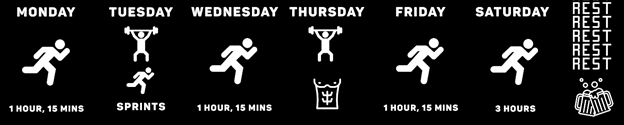
I am going to add my exercise routine below so you can use it as a template to craft your own. Do not compare yourself to me in any form, just use me as a tool.

I am aware that mine is intense. That is because I am training for another 100-mile race. You do not need to be doing cardio four times a week. Three, maybe even four, rest days a week is perfect. The first few weeks may suck, but your body will become accustomed to it and it will begin to feel strange for you to stray from the routine you worked hard to get into.

2.) Find a Workout Partner

If we weren’t being practical, we would have to put this tip at number one. Your buddy will keep you accountable for staying motivated in the gym and it will make you feel guilty if you ditch them. You are now part of a team! Give yourselves a name, create a group chat, and make it fun. Praise each other when you reach goals. We are constantly talking and pushing ourselves together. Creating this bond in the gym will make you miss your time together when you take a rest week. If you need more convincing, check out this 2016 study on how an exercise partner is a key for staying motivated to workout. Another thing I have realized with having a workout buddy is that I spend way less time on my phone in the gym. Now I don’t get lost scrolling Instagram and I rest between sets.

Two workout partners showing each other how to stay motivated to workout
Two workout partners putting in work

3.) Get Competitive

I don’t know about you, but I hate losing. Talking some smack at the gym will never hurt anyone. In fact, you will find that you lift a little stronger and push a little harder when you are a tad angry. Additionally, doing a weight loss competition with a friend is a better way to go about it. Losing weight is never an easy task, and creating a reward for the winner will make shaving weight off much more compelling.

4.) Join a Workout Group

Don’t know anyone in your area that enjoys working out? There is a slim chance that you won’t be able to find a local workout group on FaceBook. I am a part of two running groups that meet once a week. Some of them even do fun things like finish at a brewery or dinner spot. This is a good way to make friends that are also in search of motivation to workout. ­­­­­­­

Group of LADIES WORKING OUT TOGETHER TO STAY MOTIVATED TO WORKOUT

5.) Create a Workout Specific Playlist

Everyone has some music that will bring back the pre-game jitters of high school sports. Maybe you have some songs that cause your hair to stand-up and get you willing to run through a brick wall. This is the kind of energy you need for staying motivated to work out! Music will undoubtedly give you an advantage. If you don’t believe it, ask the director of the Marine Corps Marathon. They banned runners from having music while running as it gives an “unfair advantage.”

Be sure to make the playlist with about 3-4 hours of music so that you are not repeating any songs every workout. If you are having trouble finding an abundance of hype-up music, just shuffle on Spotify or Soundcloud. There are also features that will spit songs to you, “since you like ____.” Personally, I don’t even use playlists. I venture onto SoundCloud and find live performances of artists from festivals. If you are interested in our Top 50 live sets for the gym, check out this link.

6.) Consume Caffeine Before a Workout

Caffeine if one of the easiest (and most enjoyable) ways to enhance your workout. Not only does caffeine boost your cognitive performance, but your physical power increases as well.  “On average, endurance athletes enjoy about a 2-4% performance improvement, depending on the type of test and with moderate doses of caffeine. This not only means that you can race faster, but also that you can maintain higher intensities for longer during workouts, potentially leading to bigger adaptations.” This quote speaks for itself. Caffeine is the unofficial legal performance enhancing drug. To finish this section off with a fun fact: Until 2004 the World Anti-Doping Agency considered high concentrations of caffeine to be illegal in Olympic events.

7.) Try a Pre-Workout Supplement

This tip may be a tad intense for some people, but if you want a foolproof way of staying motivated in the gym, try pre-workout. Maybe you are cautious about what is in some pre-work outs. That’s fine. Just do your research. I was never a fan of pre-workout and always thought it was unneeded. Creatine freaked me out, but only because I never educated myself about it. Once I figured out that kidney health fears were overblow, drinking water solves the possible gastrointestinal issues, and the substance actually improves reasoning skills, I was all about it.

8.) Get Pumped Up

Blast music on your ride to the gym or listen to a motivational speech/podcast. Your ears may not like you, but your adrenals will love it.

9.) Lose the Excuses

Our brains make up excuses whenever possible, that’s normal. It is your job not to give into them. I use this analogy a lot – Think about a puppy. If you don’t give it the opportunity to chew on your shoes, your shoes will stay clean and hole-free. So, don’t give your mind the opportunity to give in to excuses. For example, don’t schedule your workout routine to include a run at 4 PM on a Friday. You’ll have a friend summon a mandatory happy hour that you’ll be scorned for if you miss it. 

10.) Get Some Awesome Workout Apparel

You look good – you feel good, you feel good – YOU ARE GOOD. When you look in the mirror and feel sloppy, there is a good chance your confidence will decrease. Adding a few sweet outfits to your gym wardrobe will not only help you flex on everyone at the gym, but it will also increase your motivation to workout.

11.) Change it up

It is normal to get burnt out. You may begin to feel like you are just going through the motions without any effort. To stay motivated to workout you need to mix up exercises. If you are sick of the Stairmaster, try the bike. When you stop gaining any ground in shoulder presses, exchange that workout for lateral raises.

12.) Make Working Out a Fun Event

This is the hardest method to execute. But if you can find a way to be excited to run or lift at 7 AM, you will likely never lose motivation to workout. Text your friends that your excited to get a session in together. Maybe you add some morning ritual to workout days. Light a nice candle, call a loved one before your workout, have a brainstorm session after your workout while the endorphins are still flowing. Just find a way that you can correlate working out with happiness.

 13.) Reward yourself after a workout

If you are able to get to the gym but have trouble finishing a workout without quitting early, this will help you. Some people reward themselves by eating their favorite home cooked meal after a heavy lift. What about grabbing a second cup of coffee with your workout partner. A nice long hot shower? Just find a reward that that you can utilize as motivation during your workout.

14.) Mix in Light Workouts

The reason why I love long runs is because the intensity is low. You are not focused on the pain and suffering most people experience when you commit to a treadmill sprint session. This allows your brain to space out and get lost in thought. You may experience a mental trance so deep in thought that you forget you’re working out. I can also guarantee that you will generate great ideas and positive thoughts while on these steady-state cardio exercises.

15.) Track Your Progress

This the most underrated method for staying motivated to workout. When you start to see results do you become encouraged to do more? Don’t you get excited for what is next? Then start tracking your progress so that you can see the fruits of your effort in the mirror and on paper. Schedule a day every few months to “max out” on certain exercises. This is where you will fully be able to notice how much stronger or faster you are becoming.

16.) Pre-pay for Group Classes

 This is a ballsy approach, but it is a surefire method for those who have commitment issues. When you invest money ahead of time, you have no choice to but to stay motivated. If you quit you are not only cheating yourself but becoming poor!

17.) Get 8-10 hours of sleep

Getting good sleep sets you up to succeed in any facet of your life. I am sure that many of you have worked out while you were tired or mentally exhausted and it just doesn’t work. Good sleep also does not mean a lot of sleep, you need high quality sleep. Drinking alcohol to fall asleep may feel nice, but rarely will you get that refreshing deep sleep that you may get falling asleep off of some tea.

18.) Minimize Alcohol Intake

When was the last time you woke up from a night of drinking and were excited to get to the gym? Uh… probably never. Unless you’re a psychopath, working out hungover will never be beneficial. If you are going to drink, that’s fine! Just be sure to drink before your off-days.

19.) Eat the Right Foods

This sounds very cliché, and it is probably self-explanatory. You are what you eat…

20.) Don’t Overdue it

A big part of staying motivated to workout has to do with your workload. Far too often do we see people get hit with a wave of motivation and want to run a marathon 2 weeks later. Your body is not ready nor adapted to take a huge workload yet. If you jump right into benching 225 pounds, your body’s recovery time will be upwards of 7 days. Sitting around for that long will keep your usual routine far out of reach.

21.)  Follow Inspiration on Social Media

On social media there will be motivational people and there will be thirst traps. When trying to stay motivated to workout, don’t follow the thirst traps. The influencers that aim to inspire rather than beg for likes are the ones that should be on your feed. These types of people are not only inspiring, but entertaining and add value to your mindset. It is also important to keep in mind to never compare yourself to these individuals. If you want some inspiration, check out our top ambassadors.

22.) Remember Why you Started

There came a time that you made a decision. This decision was made after you realized you needed to change. When the thoughts about quitting creep in, going back to your “why,” will keep you excited to fulfill your weekly routine.

23.) Commit to Positive Self-Talk

When you need to stay motivated to workout, there may come a time when the only person that could help you, is you! Look yourself in the mirror and say, “I am a boss a** bi***, and nothing is going to stop me.” Don’t just do this because we are telling you to. Say it like you mean it!

24.) Have Extrinsic Motivation

Extrinsic motivation is a form of determination to perform an activity to earn a reward. Although your main motivation should be for your own personal sake (intrinsic), you should reward yourself with a night out eating at your favorite restaurant after you reach a goal.

25.) Visualize your Goal

Extrinsic motivation is a form of determination to perform an activity to earn a reward. Although your main motivation should be for your own personal sake (intrinsic), you should reward yourself with a night out eating at your favorite restaurant after you reach a goal.


Staying motivated is not an easy task. This is why you see people at the gym in January but on February 1st they are nowhere to be found. Don’t go too hard on yourself and become aware that your mindset will not change with a snap of your fingers. You must remain persistent and determined. I guarantee if you try enough of these you will find one that will work for you.

Works cited:
New Science on Caffeine for Endurance Athletes and Ultrarunners
https://www.mayoclinic.org/drugs-supplements-creatine/art-20347591#:~:text=Safety%20and%20side%20effects,Muscle%20cramping
https://www.tandfonline.com/doi/abs/10.1080/15438620701693280?journalCode=gspm20
https://pubmed.ncbi.nlm.nih.gov/29704637
https://www.verywellfit.com/is-hiit-training-or-steady-state-cardio-better-4126506

6 Steps on How to Start Running

So, you are curious about how to start running. Running began in our hunting and gathering days when we didn’t have a choice. If we didn’t run, we didn’t survive.

Over time our bodies evolved to make us better hunters. We developed sweat, so we didn’t overheat. Our feet evolved to take heavy impact, and our bodies grew taller and stronger with every step we took.

We have no excuses to not run. Though, we do an excellent job at making excuses of why we don’t. If you are new to running, the article to follow will give you a great understanding of how to start running and how to do it the right way.

** Continue Scrolling for: 6 steps on how to start running **

Running for Beginners: A Quick Mitochondria Lesson

It’s amazing what the body can do to adapt to its surroundings. When you run, your body’s cells start evolving and changing to optimize endurance.

As you run, the powerhouse of the cell, the mitochondria, become denser. Additionally, the mitochondria move closer to the cell wall. This decreases the energy exchange Tim ever so slightly. Ultimately, your muscles get stronger, supporting your joints to prevent joint pain, and your heart rate and blood pressure decrease.

You are superhuman! It may not seem like it, especially in the first two to three weeks of running because your body isn’t used to it yet. It’s a major shock to your body. During this time be sure not to be too harsh on yourself, this part isn’t enjoyable.

There will be a breaking point where you feel the “runner’s high.” Even running coach, Ryan Lange admits, “I didn’t feel the runner’s high until month two and after losing fifteen pounds. It takes a while for your body to accept its new physical routine.”
How to start running begins with mental toughness. Understand that running is mainly a mental game. Your mind will want to quit when your body is only about 40-50% spent.

6 Steps on How to Start Running

Step 1 – Find your “Why”

With any exercise, you need to know why you are doing it. When people don’t have deep enough reasons behind why they do something, they quit.

Everyone’s why is different. Here are three “why” examples to consider:

  • Do you want to lose weight?
  • Do you want to look more fit?
  • Are you predisposed to heart problems?

Before moving to step 2, you need to make sure your “why” is strong enough. Most people give up on their “why” because it is too superficial.

Here is a terrific example between the two:

A superficial “why” =
I want to lose weight and look skinny.

A deep “why” =
My father was diagnosed with heart disease. I feel as if I need to work against the possibility of experiencing heart disease for myself. I also need a reason to build discipline into my weekly routine to benefit my mental health.

When you attach an emotion to your “why,” it is much easier to stick by your why when running gets tough. Don’t forget to physically write down your why and tape it to your mirror or somewhere you will see it often. Read it every day!

Another helpful tip you can do is find an old photo of when you were thinner or a photo of someone you want to look like. Print the photo off and tape it somewhere you can see it. Sometimes having a visual photo to focus on will encourage you to stick with your “why.”

Step 2 – Make a plan that is attainable, not extreme

How to train for a 5k isn’t something you’ll learn overnight. So, don’t think you’re going to run a marathon next week.

Many people like David Goggins, will make you feel like you should start running one hundred miles a week. He is great motivation but understand he is a freak of nature.

You want to make a plan that you can follow. Know the amount of time you can give to your running routine. It would be silly to plan to run six days a week, when you may only have time to run three times a week.

It happens too often where people push themselves too hard from the start, expecting results to happen quickly. Extreme would be saying you are going to run 30 minutes straight when you’ve never even run 10 minutes before.

Step 3 – Learn how to stretch and learn to like it

https://www.youtube.com/watch?v=Cuiw1oIvysA

You may think stretching is a waste of time and you just want to get your run out of the way. Though, stretching is omnipotent to prevent injury.

Here are ten benefits of stretching:

  • Improves joint range of motion
  • Improves athletic performance
  • Decreases your risk of injury
  • Increases flexibility
  • Decreases muscle stiffness
  • Enhances muscle relaxation
  • Relieves post-exercise aches and pains
  • Improves posture
  • Helps reduce or manage stress
  • Promotes circulation

Another amazing addition to stretching is using a foam roller. Foam rollers elongate and stretch your muscles, making them great tools for before and after a run.

If you are new to foam rolling, then you’ll want to start with a soft or medium-density foam roller and slowly build up to a firm foam roller. When you first start foam rolling, it can be extremely uncomfortable, so take your time.

Before you run, you should be dynamic stretching for 10 to 15 minutes. The stretching moves you do will depend on what type of running you do. Ultimately, you want to stretch every muscle you will be using on your run.

To make stretching easier, we’ve put together a 10-minute guided stretch routine to help prep your body for your next run. Many runners forget to stretch their psoas muscle, which allows you to raise your upper leg towards your body. Don’t be one of them!

Step 4 – Start with walking

How to train for a 5k starts with walking. Do you know that saying, you must crawl before you walk, and walk before you run? Well, that saying applies here.

The following plan is a fantastic way to get your lungs and muscles ready. With this plan, you are slowly building the endurance needed to start running.

You can start off walking at a slower pace and then pick up the speed as your body adjusts. Walking at a faster pace will increase your heart rate, increasing your stamina one step at a time.

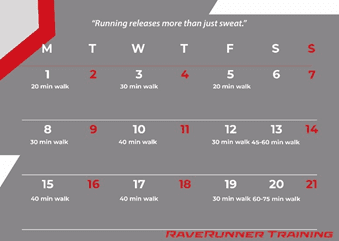
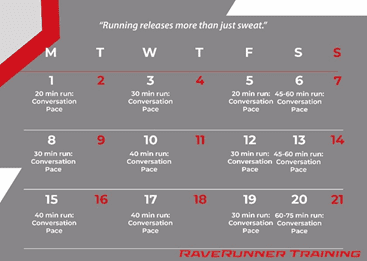
When you feel comfortable, you can start adding five minutes of running into some of these walks. Maybe stretch your running intervals to 10 minutes and then 20 minutes once you get closer to the end of the 21-day walking guide.

Step 5 – Introduce running

Running for beginners should focus on the time running and not mileage. It is much easier to gauge how many minutes you’ve been running compared to fractions of a mile.

How are you with math? Same here!

Below is your next 21-day guide to introduce running. Start slow, this is not a race! At least not yet…

Step 6 – Repeat until you can run without stopping

Repeat the 21-day introduction guide to running until you can run a full week without stopping.

Speed will come with time. Not sure if you’ve ever heard this saying, “slow is smooth, and smooth is fast,” but it’s true. Once your body adjusts to the technique of running, it will know to go faster.

Once running feels like second nature, you can start running more frequently. Add another day into your running routine when you are ready.

10 Tips for Beginning Runners

  1. Keep your hands loose

Pretend you are holding an egg in each hand. Whatever you do, don’t tense up your hands when you are running because that added tension will tire you faster.

  1. Tilt your pelvis forward

I learned this trick by running cross-country. Tilting your pelvis forward puts less strain on your muscles and it consumes less energy when running.

  1. Invest in supportive running shoes

Running shoes can make or break a run. With comfortable and supportive shoes your performance will increase, and your body will thank you in the long run.

  1. Listen to music

Listening to music can provide a great distraction. Also, it can help set your pace. Be attentive to the beat and make sure it doesn’t push you faster than with what you are comfortable.

  1. Drink more water

Running cramps can sometimes feel unavoidable. Though oftentimes, the reason we get cramps in the first place is from dehydration. So, stay hydrated!

  1. Eat more bananas

Sometimes an electrolyte imbalance causes cramps. To prevent cramps when running, eat more potassium-rich foods. If you aren’t a fan of bananas, then eat more oranges, avocados, potatoes, spinach, and tomatoes.

  1. Run in the morning

When you run in the morning you get your run done and out of the way. You also end up burning more calories throughout your day. If morning runs don’t work for you, then stick to evening runs or the time of day that works for you.

  1. Track your progress

It’s too easy to tell yourself you aren’t getting anywhere. When you write down your accomplishments, it’s proof you are getting somewhere. You can also use an Apple, Garmin watch, or Fitbit to electronically track your progress.

  1. Don’t skimp on rest days

Your body will need rest days so don’t force an extra day if you aren’t ready for it. Muscles grow on non-training days.

  1. Join a support group

Some of us do better when we are alone, but some of us do better with a support group that cheers us on. Sometimes we can all use an accountability partner!

Conclusion

After only a few short months, your body will be adapted to running. The mitochondria cells in your body are denser and closer to the cell walls.

Your muscles are stronger, believe it or not. You might not see crazy results right now, though normally other people see the change in your looks before you do.

Those micro muscles surrounding your joints have gotten stronger, creating a cushion to prevent joint pain. Your heart rate and blood pressure have decreased.

After reading this article, you now know how to start running. You also have a guide to follow to help make running easier for you.

Running for beginners is hard. Just remember, you are a beast and you’re only going to get stronger the longer you run. Got get ‘em!


5 Quick Hacks on How to Increase Stamina for Running

Do you wish to know how to lose weight by running? Well, learning how to increasing your running stamina will enable you to go longer distances and burn even more calories. So let’s jump in on how one could lengthen their distance.

It all starts with having a goal. Are you are a beginner runner, or have you been running for years? The only way to build stamina is to keep running regularly. You must have a goal and stick to a routine. For example, you want to build stamina by running 1600m for two weeks; it’s a goal.

** Continue Scrolling for: 5 Hacks to increase your running Stamina **

What is Stamina?

The truth is, building stamina for running comes with time. It is not a one-meter dash but more like a marathon, you must be patient. The concept is simple. If you must run fast, fast anaerobic exercises will help you. But if you must cover longer distances, then you must spend long hours running. The goal is the same, but the steps to achieving them may differ.

Stamina is the ability to develop your mental and physical muscles while staying on a course. It involves developing resilience or staying power till you achieve your goal. Endurance is related to stamina and is sometimes interchanged. It involves exerting pressure on yourself to build capacity for a specific goal. Thus, endurance is a fundamental part of aerobic and anaerobic exercise.

5 Ways to Increase Your Stamina for Running?

#1 Gradually Increase Mileage

It would help if you increased your running mileage in bits and spread it over some weeks. Try to bump the speed in bits and give your body time to get to the new routine. For example, if your target is the 26.2 miles, then you should train in bits. Set a target each week and stick to it until your body adjusts to it. This adjustment period may not be enjoyable. Be sure to add in recovery days and stretch as much as possible. If you feel a nagging injury, or odd knee pain come about, back off of training. Things like this will happen. Understanding to be patient is a vital role in building running stamina.

Start with 1 mile per week till your body can take the strain of 2-3 miles. Then, take little steps per week and set new goals each week. This is a process. You may need a good way to carry your phone while running, so check out the RaveRunner CHEST BAG to satisfy your needs.

During your runs if you feel as if you are pushing too hard, don’t be afraid to back off and take a short break. Maybe walk it out or stop and stretch for 90 seconds. The Journal for Strength Conditioning and Research 2006 says such breaks are power-breaks. It helps to strengthen your resolve for the next session.

Alternatively, you can have different types of power exercises after each break. But you should ensure you enjoy doing power exercise. Also, you can do a blend of low-to-high intensity workouts. For example, you can start with jogging-on-a-spot to light walk, and then brisk walk. Next, you can move to a moderate run and finally a sprint.

You can start with a brisk walk, moderate running, and then skipping a rope the following day. Remember to move from light to more intense exercises. If they are exercises you enjoy doing, it will make it easier to cope. You can also increase your milestone by 10 to 20 percent per week. That will give your body some room to adjust to the intensity. As your body adjusts to the new regime, so will your stamina ramp up gradually too.

Research shows that regular exercise can improve your energy levels, quality of sleep, and cognitive levels. In other words, building stamina for running can help you build endurance in other aspects of your body.

#2 Cross-train to Allow Muscles to Heal

Like we said earlier, recovery is omnipotent in training. Cross-training involves picking similar workout routines and alternating them with other styles. For example, you could focus on light in-door exercises now and switch to outdoor activities.

Side note: You also need to maintain proper body balance during practices. For example, your hands and wrist should move freely while running. In addition, your arms should swing sideways instead of being crossed over your torso.

Remember to have on music while running as it increases your endurance level. Yes, rock or pop music will improve your stamina by 15% during workout sessions. You can get them on iTunes, Google, Spotify, and Apple stores

#3 Maximize your Recovery Gradually

Do not forget you are still human after all. In order to learn how to increase your stamina for running you must have intermittent breaks of half or a whole day. It will help your body heal, relax and adjust to the new exercise routine.

Massage therapy

Getting a good body massage helps to relax or tone your muscles. It can serve as an aphrodisiac involving all the nerves around the massaged area. The American Massage Therapy Association explains that massage works over time. You feel better after several sessions.

Massage therapy aids proper blood circulation and the rebuilding of worn-out tissues. You should get a good massage session at least once or twice a week to calm your nerves. Massage stimulates lactic acid in your bloodstream during workouts. Lactic acid occurs when your body produces energy after breaking down carbohydrates. It helps re-energize you once your oxygen level is low. 

CBD oil

Cannabidiol or CBD oil contains anti-inflammatory components and helps to reduce anxiety and pain. In addition, you can massage CBD lubricant into the skin to improve blood flow and reduce pain. It also improves skin quality, reduces inflammation, and helps muscle recovery.

STRECH

There’s always a goal to reach, and you must get to it gradually. Remember, your body is your only workout tool. Too many intense workout routines daily could lead to faster burnout.

Do you notice a steady drop in your energy level? Check the types of exercises that lead to burnouts and reduce their frequency. For example, in the morning, you could swim and go for a yoga session. For mid-day, you could rest adequately. In the evening you could go bike riding or running.

Eat well, don’t starve.

In order to learn how to increase stamina for running you need to understand how the body works. Your body needs all the high-energy food it can get. So, eat adequately at least two hours before your workout session. Then, try to get in 300 to 400 calories to ramp up your energy levels.

The idea is to increase your energy levels. So, stick to foods like carbohydrates that will easily digest fast. Avoid overeating or filling your stomach. Carbohydrate contains glycogen which serves as fuel for your body.

Eat lean protein for rebuilding your body tissues and healing fast. Foods like carrot, berries, banana, whole-wheat bread, oatmeal, and avocado are excellent for your body. Only eat high-fiber food days before the event because they take a longer time to digest. They include cheese, beans, and high-fiber fruits.

It would be best if you also stayed hydrated. So, consume enough water at least two hours before the event. For example, take about 500 ml of water two hours before running to keep hydrated. Also, take about 200 ml of water every ten minutes into the race to stay hydrated. Being hydrated will help your body maintain its energy levels and regulate body temperature better. It also preserves your joints from damage.

Remember not to commence running immediately after drinking water. If the race lasts at least one hour, you need energy or a sports drink. Energy drink contains carbohydrate and electrolytes which is capable of boosting your energy levels.

Sleep well

As you need exercise, food, and water for sustaining your stamina, you need adequate sleep too. Sleep experts always recommend at least 7 to 8 hours of sleep each day. However, it would help if you tried to get enough sleep the day before the main event. If it is possible, try to take a nap mid-day of the day before the event. Then, try to sleep early the day before the event to maintain peak performance.

#4 Increase your Mental Toughness

Learning how to increase your stamina for running is not only a physical battle, but a mental one as well. Running is a strenuous sport and can zap your energy pretty fast. That’s why you feel the need to drink water immediately afterward. Running also exerts pressure on the mental part of you the same way it does on the physical body. That’s why most people will want to veg out after a long race. Your brain is just as beast as your body.

Exercise helps improve your cognitive level. After the mental victory comes increased determination or willpower to reach the finished line. After that, you can excel in your training program. Do short interval training to start with and then longer practice time.

Mental toughness can be built in other areas than running. Endurance a brain challenge or long day at work is mentally daunting and is a good way to callous the mind. Note that continuously draining yourself is not helpful. These mental training sessions should be very intentional.

#5 Train on Hills or Mountains

Doing varied workout sessions will help your body accustom to exercising and build your stamina. Your workout sessions should include low to high-impact workout sessions.

Incline intervals can improve your stamina by having moderate to intense workout sessions with a burst of speed. The intense session could last for sixty seconds and then moderate workout for 120 seconds. Don’t forget to alternative your workout sessions. Start with skipping drills to jumping ropes in one session. The second session could commence with plyometrics exercises like squats, lunges, clap push-ups, or bounding.

Other Notable Tips to Increasing Stamina for Running

  • Continuously focus on your training activities and goals. And it will take time to see your dreams become a reality without focusing too often on your watch.
  • Work with a well-paced and time-solid training program to develop running strength.
  • Work with a team of runners with similar goals. It will help you set achievable targets and work towards the plan.
  • Stick to your running session irrespective of the poundings and all. Your bones, joints, and muscles will come to accept this new way of life.
  • Develop strength and speed training plans over time. First, you can break it down to each week. Then, keep adding the miles and speed as each week passes.
  • Use a 20 to 30 percent incremental training plan spread out in several weeks. Work the mileage into each week’s program to avoid injuries and marathon training fatigue. 
  • If working out on the treadmill, then incorporate a warm-up and cool-down exercise into your program.
  • Wear appropriate shoes and sportswear to make running comfortable.
  • Always maintain a comfortable and sports-like running position for events. For example, do not cross your hand over your torso when running. Remaining relaxed while running; plant your heels and pushing your toes forward when running. It will help you cover more ground in the marathon.
  • Conduct performance breathing exercises to help you relax and build up your energy. Performance breathing involves inhaling two counts, hold-breath two counts, and exhale in two counts.
  • Use a heart rate monitor to check your heart rate at intervals. It helps you to calculate or study how much progress you are making. In addition, a heart rate monitor tells you the milestone covered and other vital information to boost running stamina.
So, how can you run longer hours without getting tired? How can you increase your running stamina and speed without burnout? It will take a combination of the five techniques listed above to do a good job. You need a suitable workout session for developing more robust muscles. Yes, you should pace your stamina development process but need to work at the goal continually. See you at the finish line still strong and energetic!


How We Designed the Ultimate Lost Lands Hydration Pack

When it comes to our RageRunner Hydration Packs, we don’t mess around. These aren’t just your standard hydropacks: they’re limited-edition drops, and once they sell out, they’re gone forever. That’s what makes each RageRunner special. Every bag has its own unique style, vibe, and purpose.

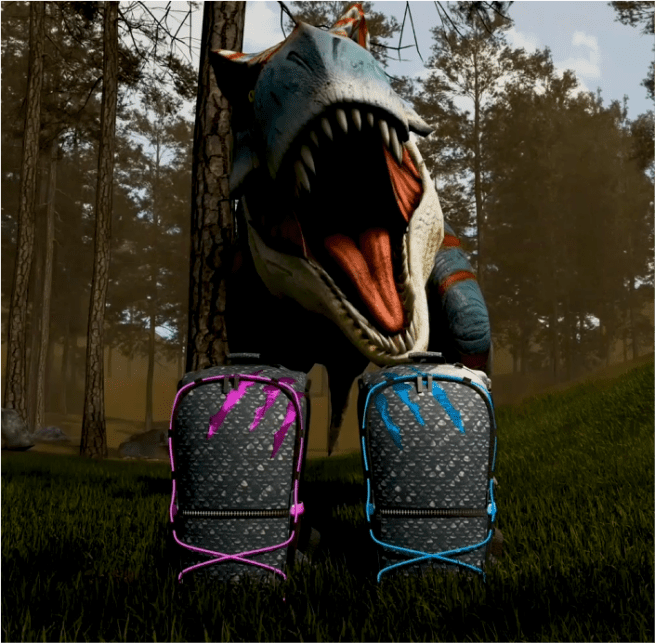
For the Lost Lands Hydration Pack, we wanted to create something different. A tough, mosh pit-friendly hydro pack that makes you feel like you’ve stepped into the prehistoric world of the Land of the Lost.

Starting with Inspiration

Like always, the first step in our process was gathering inspiration. We knew we wanted this pack to feel raw and tenacious. It had to scream Lost Lands – not just another festival bag. We wanted it to fit right in with the dinosaur vibes but still be something practical enough for a festival-goer to rock all day.

We started tossing around some ideas. Gold accents? Hell yes. Shiny and sleek, but nothing too flashy. We didn’t want this pack to steal the show entirely, so we kept the colors monochrome and muted – nothing too wild.

The Search for the Perfect Design

Next, we hit Adobe Stock and searched for elements that would bring our idea to life. Think: Dragon Scales, Dinosaur Claw Slash, and all things Jurassic. After browsing for a while, we stumbled on a pattern we liked.

We threw the pattern onto a black base in CLO 3D Garment Design Software to see how it would look, and honestly, it was next-level. But we weren’t done yet. We thought, what if we added neon green to give it that extra edge? After looking at it for a hot minute, we realized it gave off too much of a Monster Energy vibe, so we ditched it. Sometimes, less is more.

The Final Touches

Instead of the green, we opted for a bold blue claw mark that turned out to be perfect. It had the aggressive look we wanted, but still fit the Lost Lands aesthetic. We loved it so much that we decided to make a pink version for the ladies. No lie, we ended up loving the pink one even more. It’s got that extra pop that’ll definitely stand out at the festival.

After finalizing the design, we moved on to printing. We tried two different methods—foil print and sublimation. Both looked good, but when we saw that reflective foil claw under the lights, it was game over. The foil had to be the one. It just popped in a way that sublimation couldn’t match.

A Little Extra for the Drop

Now, we can’t just drop a pack this cool without going all out for the launch. So, we got our animator to create a crazy video featuring dinosaurs chasing the bags through a headbanger soundtrack. Yeah, it might be a little over the top, but that’s the kind of energy this bag deserves. Lost Lands is all about making a statement, and this pack is no exception.

Final Thoughts

Our design process might seem straightforward, but it’s all about finding the right balance between creativity and practicality. We gather inspiration, test new methods, and always push the limits to create something fresh, something different.

The Lost Lands Hydration Pack is more than just a bag – it’s a piece of the festival experience. Whether you’re diving into a mosh pit or just chilling by the stage, this pack’s got your back.

Take a look at this cool vid and see how it all came together. 🎥👇


How to Prevent Shin Splints & Stress Fractures

Shin splints and stress fractures are no fun. They are both in the top 8 most frequent running injuries experienced by athletes and exercise enthusiasts. Preventing shin splints and stress fractures is doable. It is always unfortunate to hear about someone experiencing shin splints and stress fractures because we know how annoying and painful, they can be. In the following post, we are going to spill all our knowledge on how to prevent shin splints and stress fractures from ever happening again so that you stay outside and motivated to pound some pavement throughout the week.
First, let’s define shin splints and stress fractures. Both of these injuries are commonly grouped together but they are in fact, very different. Let’s break them down:

Shin Splints:

Otherwise known as tibial stress syndrome, this is when your muscle begins to tear away from the shin bone. This results in a minor pain that gets worse with use and can become very painful if not treated. In some cases, shin splints can result in stress fractures.


Causes of shin splints

The main cause of this will be overuse. Personally, I experience them when training for a long race that includes a very high weekly mileage. If you are new to running, you may experience shin splints by trying to run high miles very suddenly. Your body needs time to adjust and heal itself so that it can perform what you are asking it to do. There are some cases that poor or cheap running shoes will cause this as well. A show with no integrity to the structure will not give your foot any support. This will result in your foot trying to compensate and overuse tiny muscles that should not normally get as much use. Lastly, you may be tying your shoe incorrectly. Try tying your shoe tighter at the meat of your foot (the middle laces). This will keep your foot completely secured to your shoe so that there is no movement. Think about wearing a pair of flip-flops. You must curl your toes up to keep the flip-flop on your foot and stop it from falling off. This tension is what aggravates your shin muscles. This same theory goes for if your shoe is not tight enough.

Treatment for shin splints

Although it may not be what you want to hear, you need to chill out and rest. This kind of injury is not one you can just push through. There needs to be minimal aggravation so that the muscle fibers can repair. We would also recommend taking an anti-inflammatory so that the swelling around the muscle is reduced.

Stress Fractures:

If you thought preventing shin splints was frustrating, be glad you never reached the point of a stress fracture. Stress fractures are when a part of your bone begins to crack like a spiderweb. The more you continue to try and work on the muscle, the worse the fracture and pain become. Like all breaks and fractures, you will be sidelined 4-6 weeks as it takes much longer for the bone to heal compared to muscle.

Causes of stress fractures:

This is another overuse injury. This is common sense, if you never give your bones the chance to heal, the injury will follow. Over time you can ask more and more from your body, but this is a process that will take weeks if not months. Another cause of this is carrying around extra weight. No, we are not calling you fat. Some people think running 2 miles in a weighted vest is an awesome idea, it is not. This activity puts sudden shock on your bones that they more than likely will not be able to handle. This is also a common injury for football players. Wearing an extra 15 pounds consisting of a helmet and pads add stress to legs that are not ready for it.

Treatment for stress fractures

Again, the best way to cure this is to rest. Besides that, we have found a cure by taking a Vitamin D3 with Calcium supplement. Although you may not have a deficiency, your body may need more than the normal amount to restore the bone damage you have done. Once we began taking these daily, our stress fractures never came back.

Conclusion

These injuries are unfortunate yet easily avoidable. The biggest way to avoid them is by listening to your body and responding to any irregular feelings you experience. Although all RaveRunners are extremely tough individuals, they also are intelligent and know when to back off. Preventing shin splints and stress fractures will keep you in the game and able to perform. After all, a RaveRunner needs to be out pounding the pavement or flippin’ tires if they want to show up and Be the Inspiration.